psoas muscle exercises pdf
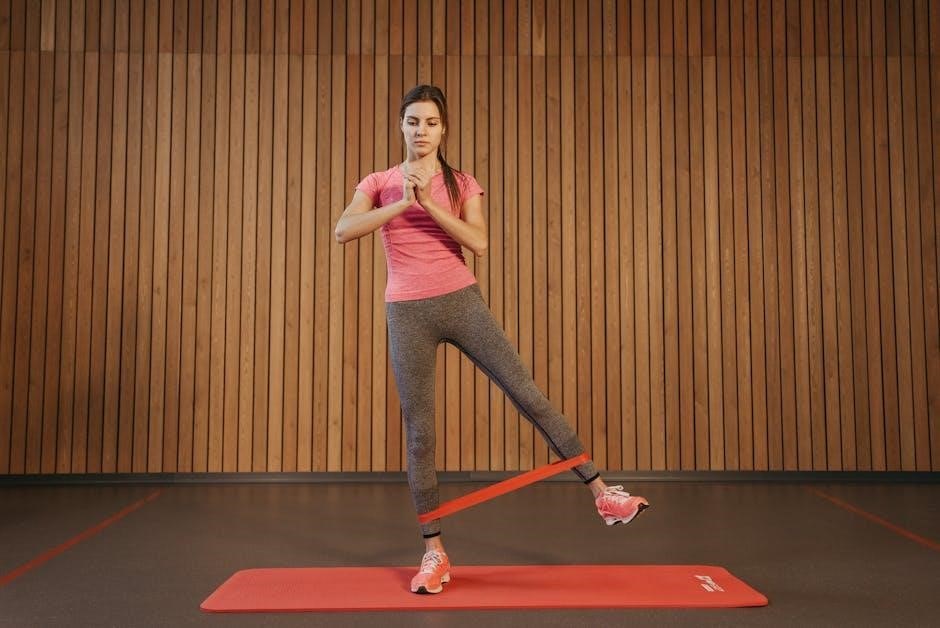
Embarking on a journey to understand psoas muscle exercises is crucial for overall well-being, offering a pathway to improved posture, reduced pain, and enhanced movement efficiency.
Numerous resources, including downloadable psoas muscle exercises PDF guides, provide structured programs for strengthening and lengthening this vital muscle group.
These guides often detail exercises suitable for various fitness levels, ensuring accessibility for beginners to advanced practitioners seeking targeted psoas care.
What is the Psoas Muscle?
The psoas muscle, often called the “muscle of the soul,” is a deep core muscle connecting the lumbar spine to the femur. It’s actually comprised of two muscles: the psoas major and the iliacus, often functioning as a single unit; Understanding its anatomy is key when exploring psoas muscle exercises PDF resources.
This powerful muscle plays a vital role in hip flexion, bringing your knee towards your chest, and also contributes to spinal stability, posture, and even breathing. Many psoas muscle exercises PDF guides emphasize its connection to emotional wellbeing, due to its influence on the diaphragm and nervous system.
A healthy psoas supports efficient movement, while a tight or weak psoas can contribute to lower back pain, hip discomfort, and postural imbalances. Therefore, targeted exercises, often detailed in psoas muscle exercises PDF materials, are essential for maintaining optimal function and overall health.
Why Psoas Health Matters
Maintaining psoas health is paramount for overall physical and emotional wellbeing, extending far beyond simply avoiding lower back pain. A well-functioning psoas supports optimal posture, efficient movement patterns, and core stability. Psoas muscle exercises PDF guides highlight this interconnectedness, emphasizing a holistic approach to fitness.
A healthy psoas facilitates proper spinal alignment, reducing strain on the lower back and promoting a neutral pelvic tilt. Many PDF resources detail how imbalances in the psoas can contribute to various issues, from hip pain to digestive problems.
Furthermore, the psoas’s connection to the diaphragm influences breathing mechanics, and its impact on the nervous system can affect stress levels. Therefore, incorporating psoas-focused exercises, as outlined in comprehensive psoas muscle exercises PDF materials, is a proactive step towards a healthier, more balanced life.
Common Issues Related to Psoas Dysfunction
Psoas dysfunction manifests in a variety of ways, often presenting as seemingly unrelated discomforts throughout the body. Psoas muscle exercises PDF guides frequently address these common issues, providing targeted solutions for relief and rehabilitation. Lower back pain is a primary symptom, often stemming from the psoas pulling on the lumbar spine.
Hip flexor tightness and limited range of motion are also prevalent, impacting gait and athletic performance. PDF resources often illustrate how a shortened psoas can contribute to anterior pelvic tilt, exacerbating these issues. Digestive problems, such as bloating and constipation, can arise due to the psoas’s proximity to abdominal organs.
Furthermore, emotional holding patterns can contribute to psoas tension, creating a vicious cycle of physical and emotional distress. Utilizing psoas muscle exercises PDF protocols can help release this tension, promoting both physical and emotional wellbeing.
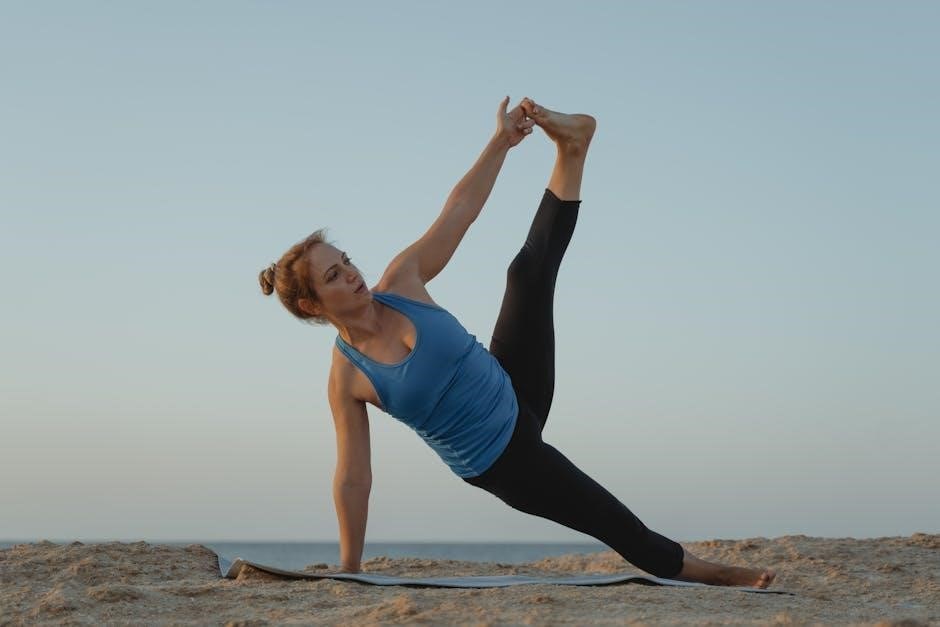
Understanding Psoas Muscle Exercises
Delving into psoas exercises requires mindful engagement, often guided by detailed psoas muscle exercises PDF resources. Proper technique is paramount for maximizing benefits and preventing injury.
The Importance of Proper Form
Maintaining impeccable form during psoas exercises is absolutely critical, far outweighing the desire to complete a high number of repetitions. Incorrect execution can not only diminish the effectiveness of the exercise but also potentially lead to strain or injury in the lower back, hips, or even knees.
Many psoas muscle exercises PDF guides emphasize the importance of core engagement throughout each movement, acting as a stabilizing force. Focus on controlled motions, avoiding any jerking or rushing. Pay close attention to pelvic tilt – aim for a neutral spine, preventing excessive arching or rounding of the back.
Visual aids within these PDF resources often demonstrate correct alignment, highlighting key muscle activations. If you’re unsure about your form, consider consulting a physical therapist or qualified fitness professional for personalized guidance. Prioritizing quality over quantity will yield far superior and safer results in your psoas muscle training journey.
Warm-up Exercises for Psoas Activation
Preparing the psoas muscle for exercise is paramount, and a dynamic warm-up is the ideal approach. Many psoas muscle exercises PDF guides begin with gentle movements designed to increase blood flow and flexibility in the hips and lower back.
Effective warm-up exercises include leg swings (forward, backward, and sideways) to mobilize the hip flexors. Gentle torso twists can improve spinal mobility, which is closely linked to psoas function. Knee circles and hip circles further enhance joint lubrication and range of motion.
Cat-cow stretches are excellent for warming up the core and lower back, promoting spinal articulation. Include pelvic tilts to gently engage and awaken the psoas. These warm-up exercises should be performed slowly and deliberately, focusing on controlled movements rather than speed. A well-executed warm-up significantly reduces the risk of injury and optimizes exercise performance.
Cool-down Exercises for Psoas Recovery
Following psoas-focused exercises, a dedicated cool-down is essential for muscle recovery and preventing soreness. Psoas muscle exercises PDF resources often highlight the importance of static stretching to lengthen the muscle fibers and restore flexibility.
Effective cool-down stretches include the supine psoas stretch, holding the position for 30-60 seconds to deeply release tension. The kneeling hip flexor stretch provides a similar benefit, targeting the psoas and surrounding muscles. Gentle hamstring stretches can also aid in recovery, as tight hamstrings can contribute to psoas strain.
Deep breathing exercises during the cool-down promote relaxation and reduce muscle tension. Foam rolling the hip flexors can further enhance recovery by releasing knots and improving circulation. Prioritizing a thorough cool-down ensures optimal muscle function and minimizes the risk of post-exercise discomfort.
Specific Psoas Exercises
Numerous psoas muscle exercises PDF guides detail targeted movements, including the psoas march, knee-to-chest stretches, and supine releases for optimal muscle engagement.
Psoas March
The Psoas March is a foundational exercise frequently detailed in psoas muscle exercises PDF guides, designed to specifically activate and strengthen the psoas. Begin by lying on your back with your knees bent at a 90-degree angle and feet flat on the floor.
Slowly lift one knee towards your chest, maintaining a stable core and keeping your lower back pressed gently into the floor. Focus on initiating the movement from the hip flexor, engaging the psoas muscle.
Pause briefly at the top of the movement, then slowly lower the leg back to the starting position. Alternate legs, continuing the “marching” motion.
Many PDF guides recommend 10-15 repetitions per leg, focusing on controlled movements rather than speed. Proper form is paramount; avoid arching your back or using momentum. This exercise builds core stability and improves hip flexor strength.
Knee to Chest Stretch
The Knee to Chest Stretch is a staple in psoas muscle exercises PDF resources, offering a gentle yet effective way to lengthen the psoas and surrounding hip flexors. Begin by lying comfortably on your back with your knees bent and feet flat on the floor.
Slowly bring one knee towards your chest, clasping your hands behind your thigh or shin. Gently pull the knee closer, feeling a stretch in the front of your hip and thigh. Maintain a relaxed lower back, avoiding any forceful pulling.
Hold the stretch for 20-30 seconds, breathing deeply and allowing the muscles to release. Repeat on the other side.
PDF guides often suggest variations, such as performing the stretch with both knees simultaneously or gently rocking side to side. This stretch improves flexibility, reduces lower back tension, and counteracts the shortening effects of prolonged sitting.
Supine Psoas Stretch
The Supine Psoas Stretch, frequently detailed in psoas muscle exercises PDF guides, is a more intense stretch targeting the deeper layers of the psoas. Begin lying on your back with both legs extended. Bend one knee and place the foot flat on the floor.
Gently draw the opposite knee towards your chest, rotating your thigh slightly outward. This rotation is key to isolating the psoas. Allow the knee to fall gently towards the side, feeling a stretch in the front of the hip of the extended leg.
Support the bent knee with your hand if needed, but avoid forcing the stretch. Hold for 30 seconds, breathing deeply.
Many PDF resources emphasize maintaining a neutral spine and avoiding arching the lower back. This stretch effectively releases tension in the psoas, improving hip mobility and alleviating lower back discomfort.
Standing Psoas Stretch
The Standing Psoas Stretch, often illustrated in psoas muscle exercises PDF guides, offers a convenient way to lengthen the hip flexors and psoas muscle throughout the day. Begin by standing tall with your feet hip-width apart;
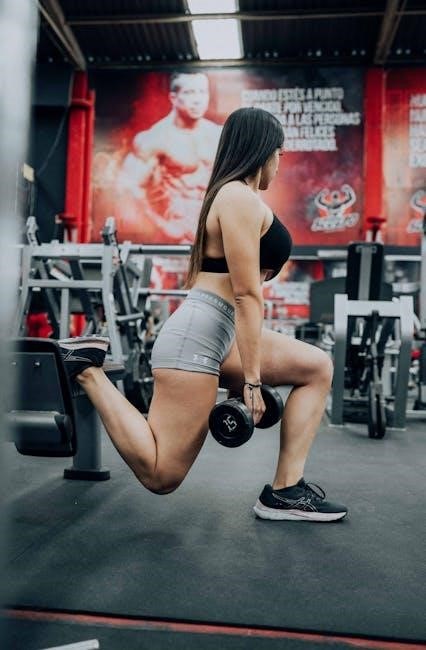
Step one leg back into a lunge position, ensuring your front knee is bent at a 90-degree angle and aligned over your ankle. Gently press your hips forward, feeling a stretch in the front of the hip of the back leg.
Maintain a straight back and engage your core to prevent overextension of the lower back. You can raise the arm on the same side as the back leg for an increased stretch.

PDF resources often advise holding the stretch for 20-30 seconds, breathing deeply. This stretch is excellent for counteracting the effects of prolonged sitting and improving hip flexibility.
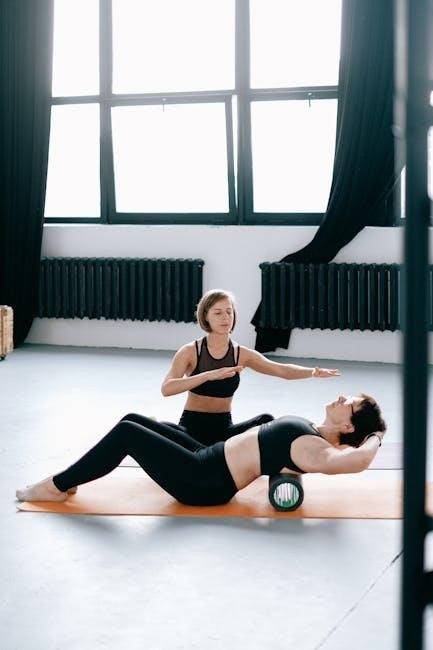
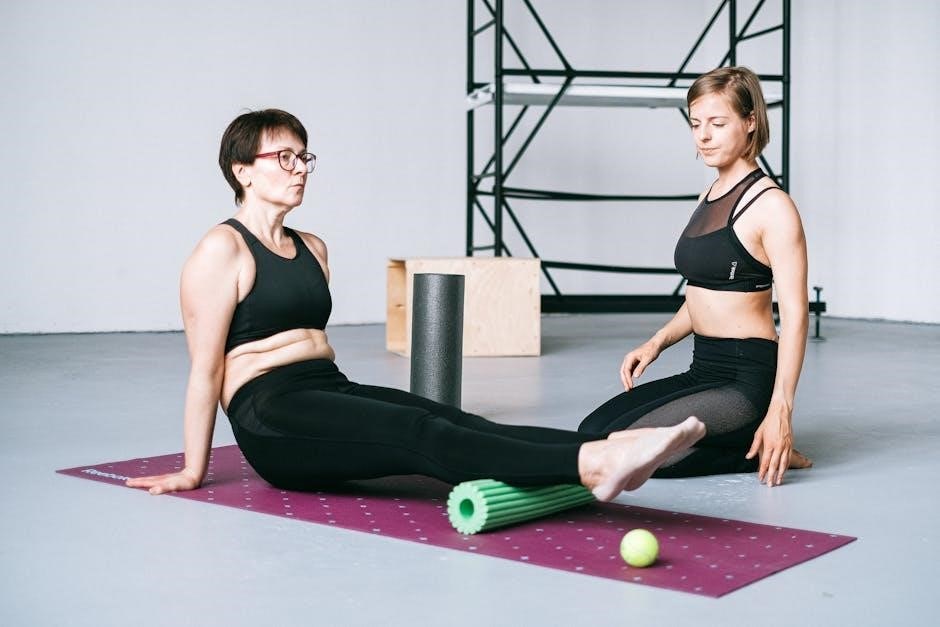
Psoas Release with Foam Roller
Psoas release using a foam roller, frequently detailed in psoas muscle exercises PDF guides, is a self-myofascial release technique to alleviate tension in the psoas and surrounding hip flexors. Lie on your side with the foam roller positioned just below your hip bone.
Support your upper body with your forearm and gently roll your hip over the foam roller, searching for tender spots. Avoid rolling directly on the hip bone itself.
Slow, controlled movements are key; spend 30-60 seconds on each area, breathing deeply. PDF guides emphasize caution, advising to start with minimal pressure and gradually increase it as tolerated.
This technique can help release muscle knots, improve flexibility, and reduce lower back pain. Remember to consult a healthcare professional if you experience sharp or intense pain during the process.
Hip Flexor Stretch with Wall Support
The hip flexor stretch with wall support, often illustrated in psoas muscle exercises PDF guides, provides a gentle yet effective way to lengthen the psoas and surrounding hip flexors. Stand facing a wall, approximately arm’s length away.
Place one foot forward, bent at a 90-degree angle, and the other leg extended straight back, heel on the ground. Lean your hips forward towards the wall, maintaining a straight back and engaged core.
You should feel a stretch in the front of your hip of the extended leg. PDF resources recommend holding the stretch for 30 seconds, repeating 2-3 times on each side.
Using the wall for support allows for a deeper stretch while minimizing strain. This exercise is beneficial for improving posture and relieving lower back discomfort, as detailed in many exercise guides.
Advanced Psoas Exercises
Progressing beyond foundational movements, advanced psoas exercises—detailed in comprehensive psoas muscle exercises PDF resources—demand greater core strength and control for optimal results.
Bilateral Leg Raises
Bilateral leg raises are a challenging yet effective exercise for strengthening the psoas, rectus abdominis, and hip flexors, often detailed within advanced psoas muscle exercises PDF guides. Begin by lying supine with legs extended and arms at your sides.
Engage your core and slowly lift both legs simultaneously, keeping them straight or with a slight bend in the knees. Avoid arching your lower back; maintain a neutral spine throughout the movement.
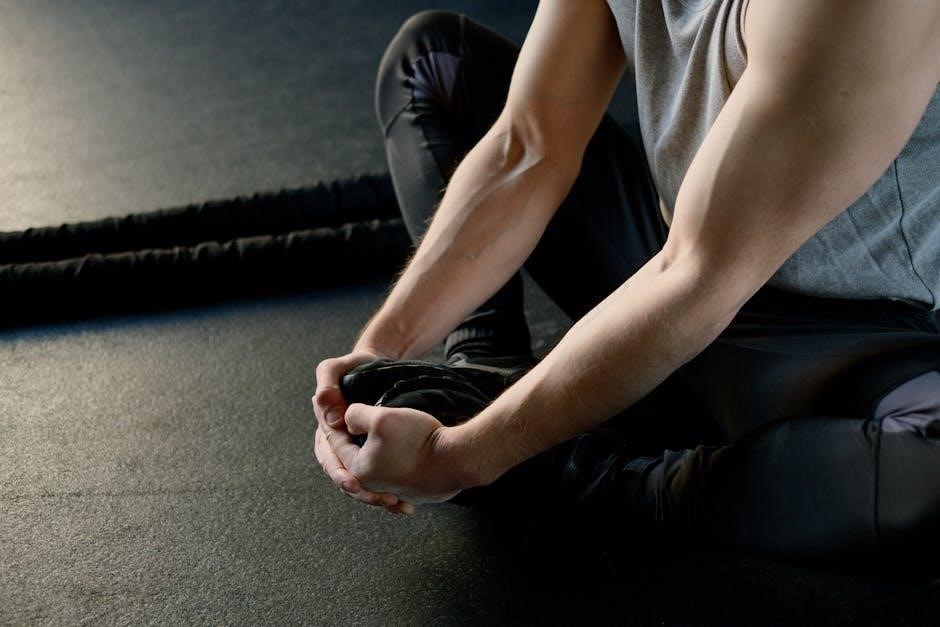
Raise your legs to a 90-degree angle or as high as comfortably possible, then slowly lower them back down with control.
Focus on using your hip flexors and core to initiate the movement, rather than momentum. Many psoas exercise PDFs recommend starting with a lower rep range (8-12) and gradually increasing as strength improves. Proper form is paramount to prevent lower back strain.
Single Leg Raises
Single leg raises represent a progressive step from bilateral variations, demanding greater core stability and psoas engagement, frequently outlined in comprehensive psoas muscle exercises PDF resources; Lie supine with one leg bent at the knee and the other extended straight.
Keeping the extended leg straight (or slightly bent), slowly lift it off the ground, engaging your hip flexors and core. Maintain a neutral spine, preventing lower back arching.
Raise the leg to approximately 45-90 degrees, then slowly lower it back down with controlled movement.
Focus on isolating the psoas and hip flexors, avoiding swinging or using momentum. Psoas exercise PDFs often suggest performing 10-15 repetitions per leg, focusing on quality over quantity. This exercise is excellent for addressing imbalances and enhancing unilateral strength.
Hanging Leg Raises (Progression)
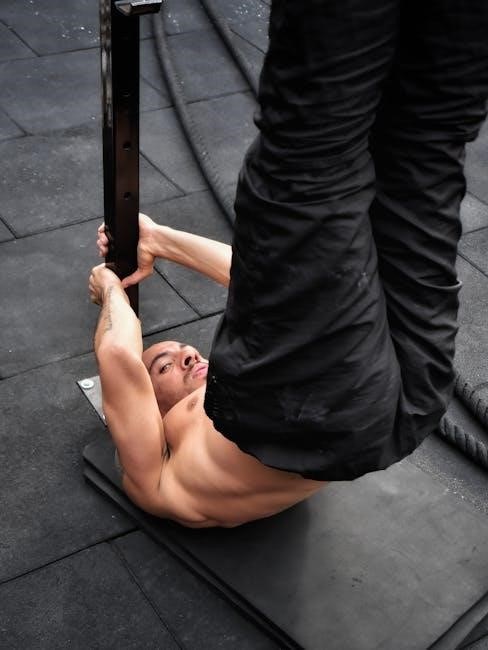
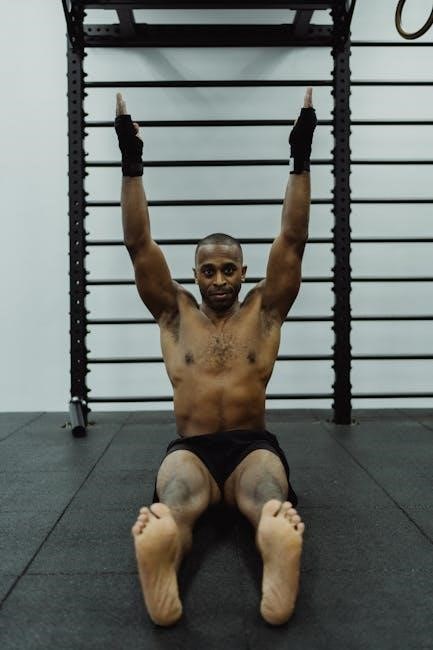
Hanging leg raises are an advanced psoas exercise, often presented as a progression within detailed psoas muscle exercises PDF guides, requiring significant core strength and control. Begin by hanging from a pull-up bar with an overhand grip, ensuring a secure hold.
Engage your core and slowly raise your legs, keeping them straight or slightly bent, towards your chest. Avoid swinging or using momentum; the movement should be controlled and deliberate.
Focus on contracting the psoas and lower abdominal muscles throughout the exercise. Raise your legs as high as comfortably possible, aiming for at least a 90-degree angle at the hips.
Slowly lower your legs back to the starting position, maintaining control. PDF resources typically recommend starting with 5-10 repetitions, gradually increasing as strength improves. This exercise builds functional strength and enhances psoas activation.
Psoas-Focused Pilates Exercises
Pilates offers a fantastic approach to psoas muscle engagement, frequently detailed within comprehensive psoas muscle exercises PDF guides. Exercises like the “Hundred” and “Roll-Up” specifically target the core and hip flexors, indirectly strengthening the psoas.
The “Single Leg Circles” and “Double Leg Stretch” further enhance psoas activation by promoting controlled hip movement and core stabilization. These exercises emphasize mindful movement and precise technique.
PDF resources often highlight modifications for varying fitness levels, allowing beginners to build foundational strength before progressing to more challenging variations. Pilates focuses on lengthening and strengthening the psoas, improving flexibility and reducing tension.
Integrating Pilates into a routine, as outlined in many guides, can significantly improve posture, alleviate lower back pain, and enhance overall body awareness, making it a valuable component of psoas health.
Integrating Psoas Exercises into a Routine
Psoas muscle exercises PDF guides recommend 2-3 sessions weekly, incorporating warm-ups, targeted stretches, and cool-downs for optimal results and injury prevention.
Frequency and Duration
Determining the ideal frequency and duration for psoas exercises depends on individual needs and fitness levels, as detailed in many psoas muscle exercises PDF resources. Generally, incorporating psoas-focused movements 2-3 times per week is a beneficial starting point.
Each session should ideally last between 15-30 minutes, allowing sufficient time for a thorough warm-up, the execution of chosen exercises, and a proper cool-down. Beginners may start with shorter durations and fewer repetitions, gradually increasing intensity as strength and flexibility improve.
Consistency is key; regular, moderate effort yields better results than infrequent, intense workouts. PDF guides often suggest alternating between strengthening and stretching exercises to promote balanced muscle development. Listen to your body and adjust the frequency and duration based on how you feel, avoiding overtraining or pushing through pain.
Combining with Other Exercises
Psoas exercises are most effective when integrated into a well-rounded fitness routine, as highlighted in comprehensive psoas muscle exercises PDF guides. Pairing psoas work with core strengthening exercises – such as planks, bridges, and bird-dogs – enhances stability and supports proper spinal alignment.
Complementing psoas stretches with glute and hamstring exercises helps address muscle imbalances often associated with psoas tightness. Incorporating exercises that promote hip mobility, like hip circles and figure-four stretches, further optimizes movement patterns.
PDF resources often recommend combining psoas exercises with low-impact cardio, like walking or swimming, to improve circulation and enhance recovery. Remember to prioritize proper form and listen to your body, adjusting the intensity and volume of combined exercises as needed to prevent overtraining and maximize benefits.
Modifications for Different Fitness Levels
Psoas muscle exercises PDF guides frequently emphasize the importance of modifications to accommodate varying fitness levels. Beginners can start with gentler variations, such as performing knee-to-chest stretches while lying on their backs with both knees bent, focusing on controlled movements.
Intermediate practitioners can progress to more challenging exercises, like the psoas march, increasing the range of motion and adding resistance bands. Advanced individuals can explore dynamic movements, such as single-leg raises or hanging leg raises, ensuring core engagement throughout.
Modifications also address individual limitations; for example, using a pillow under the lower back during stretches can provide support. PDF resources often include regressions and progressions, allowing users to tailor the exercises to their specific needs and gradually increase intensity over time.
Psoas Exercises for Specific Conditions
Psoas muscle exercises PDF resources often categorize routines for conditions like lower back pain, hip discomfort, and postural imbalances, offering targeted relief.
Exercises for Lower Back Pain
Lower back pain is frequently linked to psoas dysfunction, making targeted exercises essential for relief and rehabilitation. Many psoas muscle exercises PDF guides prioritize gentle stretches and strengthening movements to address this connection.
Key exercises include supine psoas stretches, performed by gently drawing the knee towards the chest while maintaining a neutral spine, releasing tension in the muscle. Knee-to-chest stretches are also beneficial, promoting spinal mobility and reducing pressure on the lower back.
Furthermore, pelvic tilts help to engage core muscles and stabilize the pelvis, supporting the psoas and alleviating strain. Gentle hip flexor stretches, avoiding overextension, can also contribute to pain reduction. PDF guides often emphasize proper form and controlled movements to prevent exacerbating the condition, recommending starting with a few repetitions and gradually increasing intensity as tolerated.
Consistent practice, guided by a reliable PDF resource, can significantly improve lower back pain associated with psoas tightness.
Exercises for Hip Pain
Hip pain often stems from imbalances in the muscles surrounding the hip joint, with the psoas playing a critical role. Psoas muscle exercises PDF resources frequently offer targeted routines to address this issue, focusing on restoring proper muscle length and function.
Effective exercises include the standing psoas stretch, gently leaning forward while maintaining a stable core, and the supine psoas stretch, drawing the knee towards the chest. These stretches aim to release tension in the psoas, reducing compression on the hip joint.
Strengthening exercises, such as psoas marches, help to stabilize the hip and improve muscle control. PDF guides often incorporate hip mobility drills, promoting a greater range of motion and reducing stiffness. Proper form is paramount to avoid aggravating the pain, and gradual progression is recommended.
Consistent adherence to a well-structured PDF program can significantly alleviate hip pain linked to psoas dysfunction.
Exercises for Posture Correction
Poor posture is frequently linked to a tight psoas muscle, pulling the pelvis forward and contributing to an exaggerated lumbar curve. Psoas muscle exercises PDF guides often prioritize routines designed to counteract these effects, restoring a neutral pelvic alignment.
Key exercises include the supine psoas stretch, actively tilting the pelvis to flatten the lower back against the floor, and the kneeling hip flexor stretch, gently extending the hip while maintaining an upright posture. These stretches lengthen the psoas, releasing tension that contributes to postural imbalances.
Strengthening core muscles is also vital, providing support for the spine and preventing the psoas from overcompensating. PDF resources often include exercises like pelvic tilts and abdominal bracing. Focusing on mindful movement and engaging the deep core stabilizers is crucial for long-term postural improvement.
Regularly implementing a PDF-guided program can lead to noticeable improvements in posture and reduced strain on the spine.

Resources and Further Information
Explore comprehensive psoas muscle exercises PDF guides for detailed routines. Discover online video tutorials demonstrating proper form, and consider consulting a physical therapist for personalized guidance.
Recommended PDF Guides for Psoas Exercises
Numerous downloadable PDF guides offer structured psoas exercise programs, catering to diverse needs and fitness levels. These resources frequently present exercises with detailed illustrations and step-by-step instructions, ensuring proper form and minimizing injury risk.
Look for guides that emphasize a holistic approach, incorporating both strengthening and stretching exercises to address psoas imbalances effectively. Some PDFs focus on specific conditions, such as lower back pain or hip dysfunction, providing tailored routines.
Highly recommended resources often include guides from qualified physical therapists or certified movement specialists. These professionals provide evidence-based exercises and modifications for various limitations. Always prioritize guides that emphasize mindful movement and body awareness, promoting a deeper connection with your psoas muscle and its role in overall movement patterns. Before starting any new exercise program, it’s wise to consult with a healthcare professional.
Online Video Tutorials
Complementing PDF guides, online video tutorials provide a dynamic learning experience for psoas exercises. Visual demonstrations are invaluable for understanding proper form and movement patterns, reducing the risk of incorrect execution.
Platforms like YouTube host a wealth of content from qualified physical therapists and fitness professionals, offering a range of exercises from beginner-friendly stretches to advanced strengthening routines.
Seek out tutorials that clearly explain the muscle engagement and biomechanics involved, enhancing your understanding of how each exercise benefits your psoas. Pay attention to cues regarding posture, breathing, and modifications. Many videos also offer variations to accommodate different fitness levels and limitations. Remember to always listen to your body and stop if you experience any pain. Combining video guidance with a downloadable psoas exercise PDF can create a comprehensive learning approach.
Consulting a Physical Therapist
While psoas muscle exercises PDF guides and online resources are helpful, consulting a physical therapist offers personalized care. A therapist can accurately assess your specific needs, identifying any underlying imbalances or dysfunctions contributing to psoas-related issues.
They can then design a tailored exercise program, ensuring proper form and progression to maximize benefits and minimize risk of injury. This is particularly crucial if you have pre-existing conditions, such as lower back pain or hip problems.
A physical therapist can also provide manual therapy techniques to release tension in the psoas and surrounding tissues. They can educate you on self-management strategies, including appropriate stretches and exercises to incorporate into your routine, supplementing your understanding from a psoas exercise PDF. Their expertise ensures safe and effective rehabilitation.